A radiant smile can be life-changing, boosting your self-confidence and leaving a lasting impression. Whether you’re looking to enhance the appearance of your teeth or fix misalignments, cosmetic dentistry offers several solutions. Two of the most popular choices today are veneers and Invisalign. But which one is better for you? In this blog, we’ll explore the differences, benefits, and considerations to help you make an informed decision.
Understanding Veneers
Veneers are a popular cosmetic solution for those who want an immediate transformation. They are thin, custom-made shells designed to cover the front surface of teeth, instantly improving their appearance.
How Veneers Work
Veneers are crafted from either porcelain or composite resin and are bonded to your teeth, altering their size, shape, and color. They don’t move your teeth, but instead hide imperfections like minor misalignments, chips, and discoloration. This is an excellent option if your teeth are generally healthy but have aesthetic issues you’d like to correct.
Who Should Consider Veneers?
Veneers are ideal for patients with:
- Chipped or cracked teeth: Veneers can restore a smooth, even surface to damaged teeth.
- Severe discoloration: Stubborn stains that don’t respond to whitening treatments can be hidden with veneers.
- Minor misalignments: While veneers don’t correct alignment issues, they can mask minor spacing or crookedness.
- Uneven or worn teeth: Veneers are a great solution if your teeth are uneven in length or have been worn down over time.
Benefits of Veneers
Veneers offer several distinct advantages:
- Instant results: Unlike orthodontic treatments, veneers provide a near-immediate transformation, typically in just a couple of visits.
- Durable and stain-resistant: Porcelain veneers, in particular, are highly durable and resistant to stains, making them a long-lasting option.
- Natural appearance: Custom-made to match your natural teeth, veneers can give you a flawless smile that looks entirely natural.
- Veneers typically last between 10 to 15 years with proper care, making them a long-term solution for those who want to enhance their smile quickly.
Invisalign: A Clear Path to Straight Teeth
For patients who want to correct crooked or misaligned teeth, Invisalign offers a non-invasive alternative to traditional braces. Unlike purely cosmetic veneers, Invisalign works to align and straighten teeth over time.
How Invisalign Works
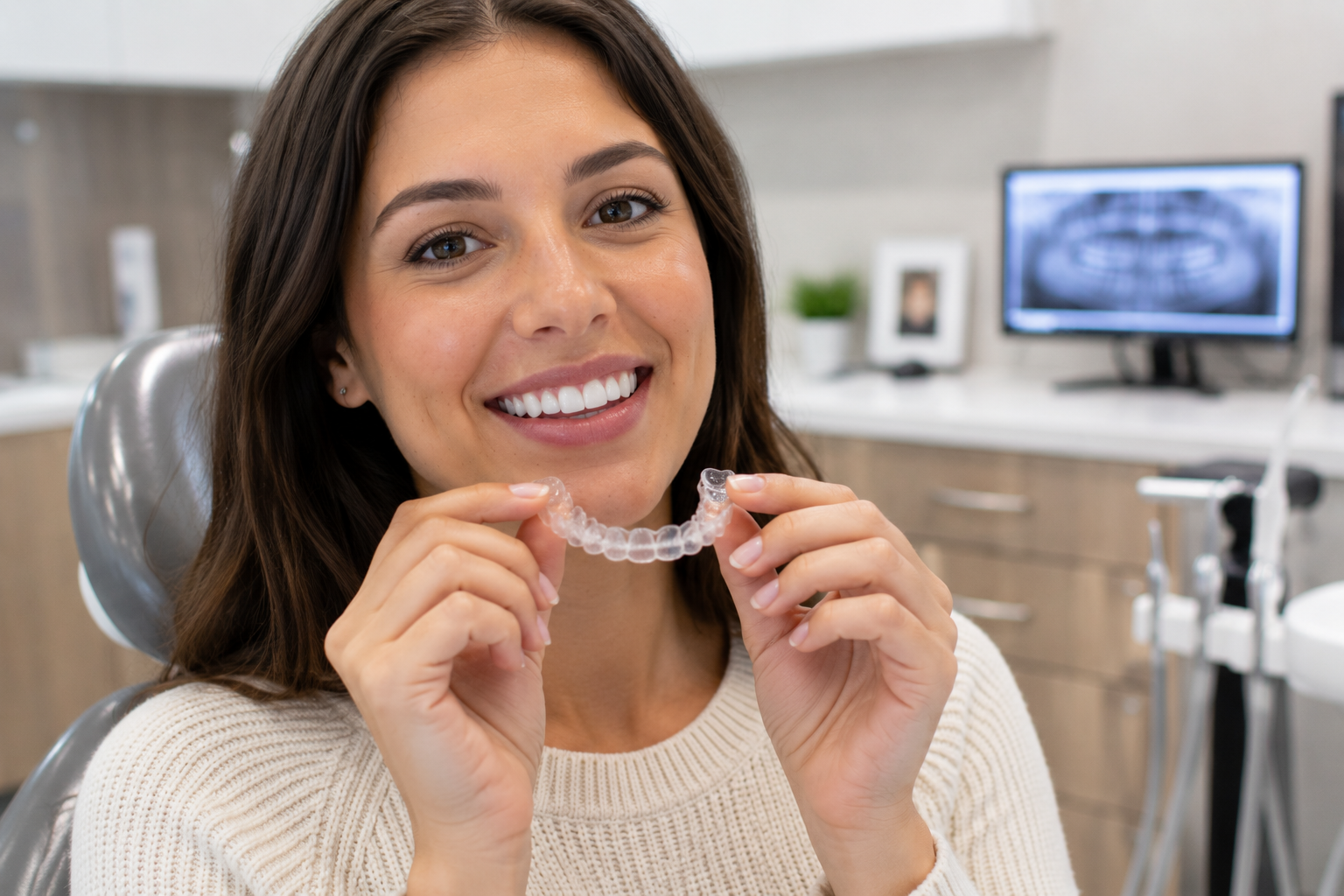
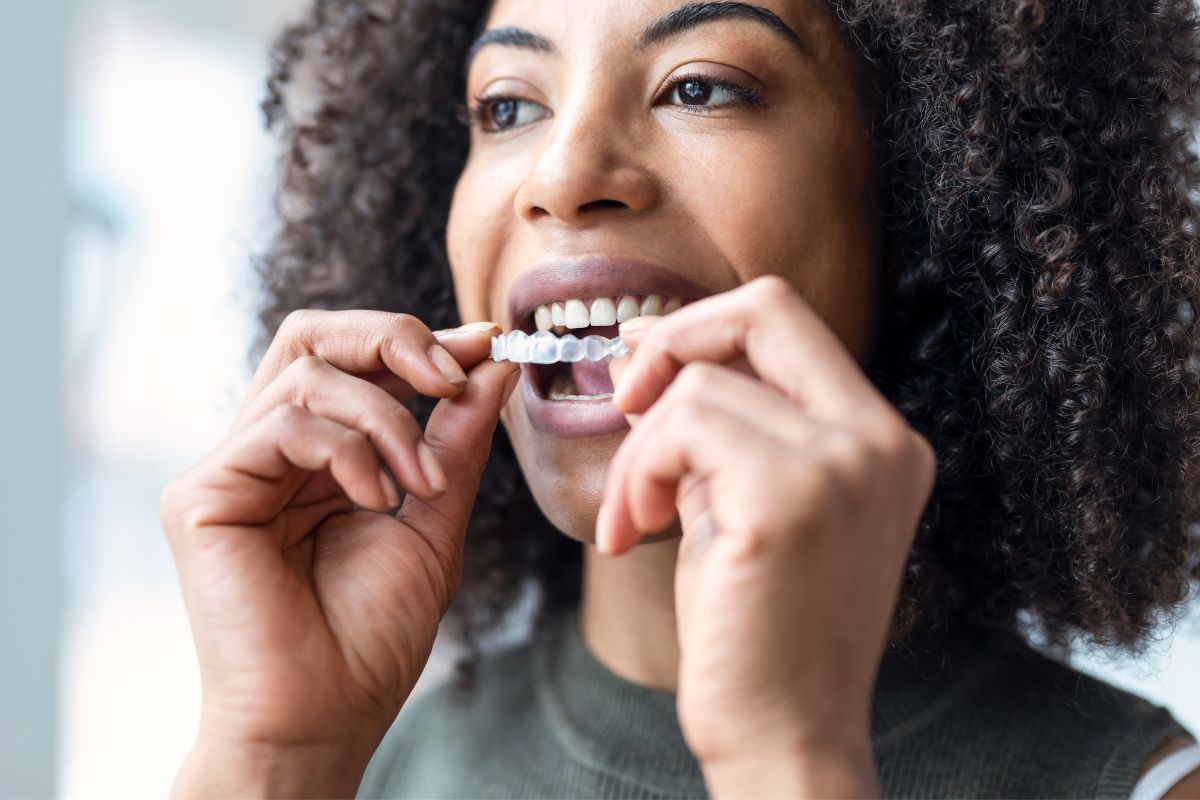
Invisalign uses a series of clear, removable aligners that gradually move your teeth into their proper positions. These aligners are custom-made using 3D imaging technology, ensuring a perfect fit for each stage of your treatment. Unlike metal braces, Invisalign aligners are virtually invisible, offering a discreet way to straighten teeth.
Each aligner is worn for about two weeks, after which you switch to the next set. Depending on the complexity of your case, treatment can last anywhere from 6 to 18 months.
Who Should Consider Invisalign?
Invisalign is ideal for patients with:
- Crowded or gapped teeth: Invisalign can help correct both overcrowded teeth and noticeable gaps.
- Mild to moderate misalignments: Invisalign is highly effective for a range of orthodontic issues like overbites, underbites, and crossbites.
- The desire for discreet treatment: If you want to straighten your teeth without the look of traditional braces, Invisalign is the perfect solution.
Benefits of Invisalign
- Nearly invisible: The clear aligners are hard to detect, making them a great option for adults and teens who don’t want noticeable metal braces.
- Comfort and convenience: Unlike braces, Invisalign aligners are removable, so you can take them out for eating, drinking, and brushing. This also means there are no food restrictions or difficulties with oral hygiene.
- Health benefits: By correcting misalignments, Invisalign can improve your bite, reduce wear on teeth, and enhance overall oral health.
With Invisalign, you’ll not only enjoy the cosmetic benefits of a straighter smile but also improved function and health. Treatment times vary, but many patients complete their Invisalign journey within 12-18 months.
Veneers vs. Invisalign: A Comparison
Now that we’ve covered the basics of both treatments let’s compare them to help you decide which is best for your smile.
Aesthetic vs. Functional Results
Veneers provide an immediate aesthetic boost by covering imperfections but won’t correct underlying issues like misalignment or bite problems. Whereas Invisalign corrects the functional aspect of your teeth by straightening them, but it takes time to see the results.
If you are mainly concerned with appearance and want fast results, veneers might be the better choice. However, if you want to correct the position of your teeth, Invisalign is the ideal solution.
Time Investment
Veneers require just a few dental visits to complete, offering immediate improvements. In contrast, Invisalign requires a commitment to wearing aligners for 20-22 hours a day for several months to achieve the desired result. If you’re seeking a quick fix, veneers are a faster option. Invisalign, while taking longer, provides a permanent solution to misaligned teeth.
Long-Term Maintenance
Veneers can last up to 15 years with good care, but they may need to be replaced after that time. Invisalign’s results are long-lasting if you wear your retainer to maintain alignment post-treatment.
Choosing between veneers and Invisalign depends on your individual needs. If you’re looking for an immediate cosmetic improvement, veneers offer a fast, stunning transformation. On the other hand, if you’re looking to straighten your teeth while improving your oral health, Invisalign is the better option. At Innovative Dental Specialists of Vibe Dentistry Spring, we specialize in personalized treatment plans that align with your smile goals. Schedule your consultation today, and let’s work together to find the best solution for you!